I’m an expert but in a changing field
For most of my career in technical marketing and developer relations, I could tell whether a new piece of content was ready. Experience and education underpinned my decisions. The rules were clear: name the audience, keep a single focus, deliver usable information that was unique or close to unique, and push the reader to an action. If a draft hit those, we published it. We had a lot of wins.
That test is incomplete now. A growing share of discovery never starts with a person reading your page from the top. It starts with an AI assistant (Claude, ChatGPT, others) deciding whether any fragment of your work answers one question.
The share is large enough to change the job. Pew Research Center looked at 68,879 Google searches from March 2025 and found that about 18% produced an AI summary. Longer, question-shaped queries were far more likely to get one. Industry trackers put AI’s slice of informational search in a similar 15–24% band. A meaningful part of the buyer’s path now happens in an answer, not a click.
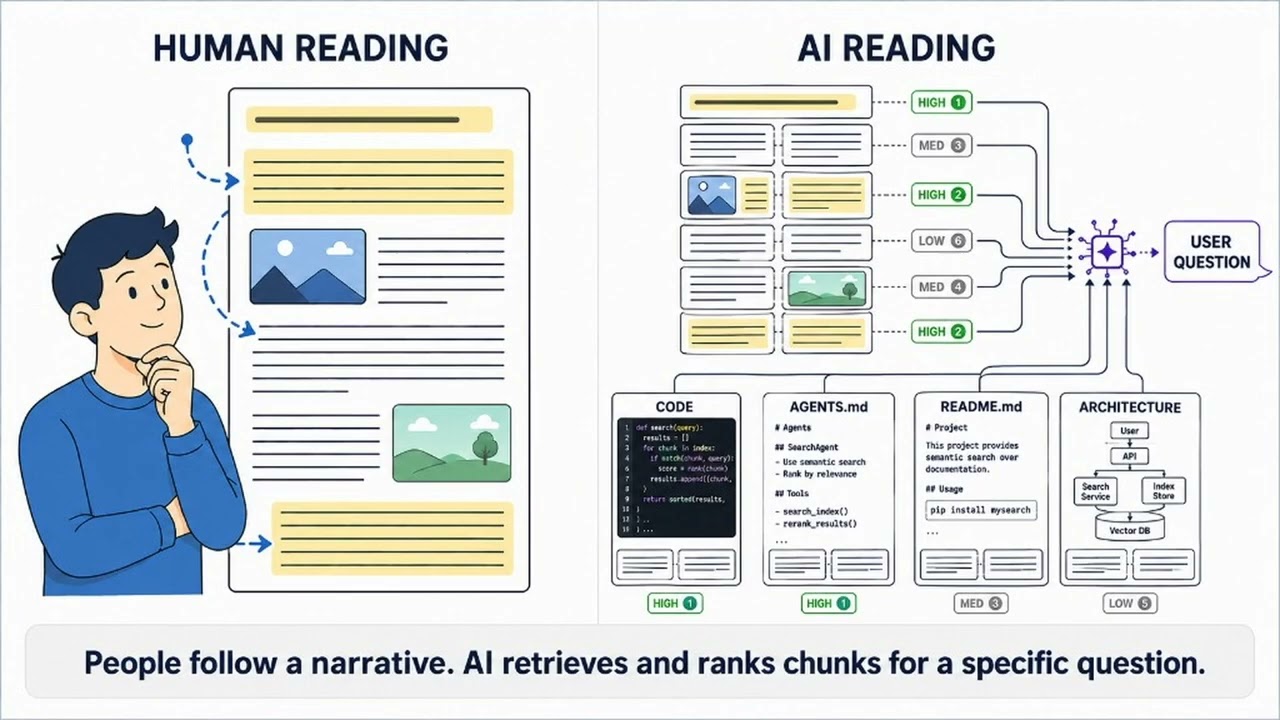
People follow a narrative. AI retrieves and ranks chunks.
A human reader moves through your intro, your proof, and your close. An AI assistant splits the same document into chunks. And it likely adds things you won’t even try to read like related READMEs, code samples, architecture diagrams… It scores those chunks for a specific question, then synthesizes an answer.
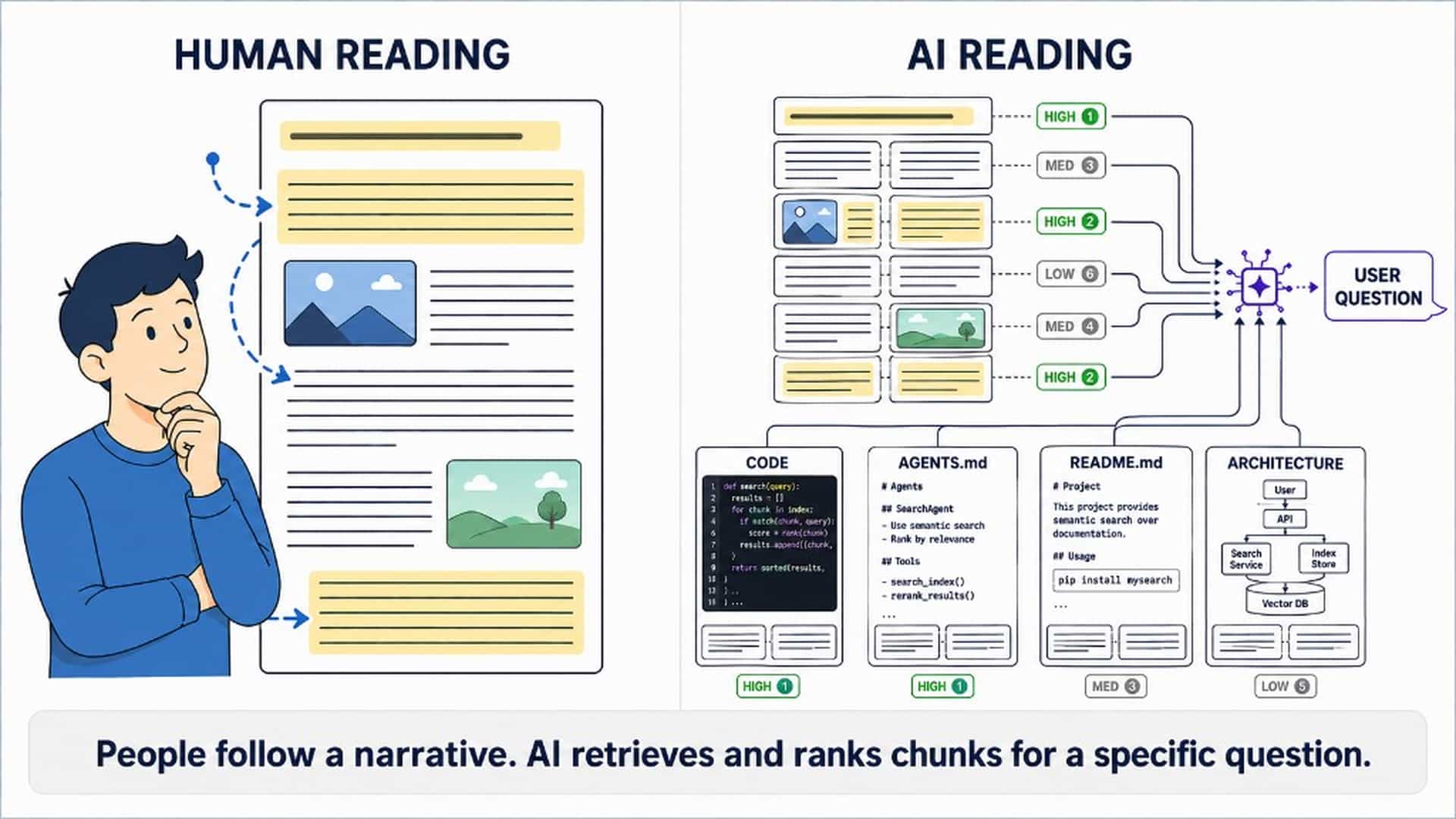
The instinct that made you good at this work is still necessary. Humans are still reading. But taste cannot figure how an AI assistant will chunk a page. You cannot eyeball ranked relevance the way you used to eyeball a headline. A page can read beautifully to a trained technical marketer and still fail the only test that matters for AI discovery:
Does this answer the question well enough to be retrieved?
What has to change is the review. Start with the questions developers and buyers actually ask (How do I…? Which tool…? Can it handle…?). Write so the answer is explicit in a retrievable chunk. Then test the draft before you publish, the way an AI assistant will read it, not after the campaign is live and the ranking tools tell you what you already missed. Then hand it to a client with evidence.
A possible way forward
We’re building a tool to address this. Oppvera is a free, open source lab for AI search strategy. It tests whether a live site and drafted pages answer the questions buyers type, and shows strengths, weaknesses, and gaps. Scores are lab results on that question set, not an exact ChatGPT forecast. Detail-oriented teams can run many tests and campaigns, including drafts meant for AI readers, not only the next blog post.
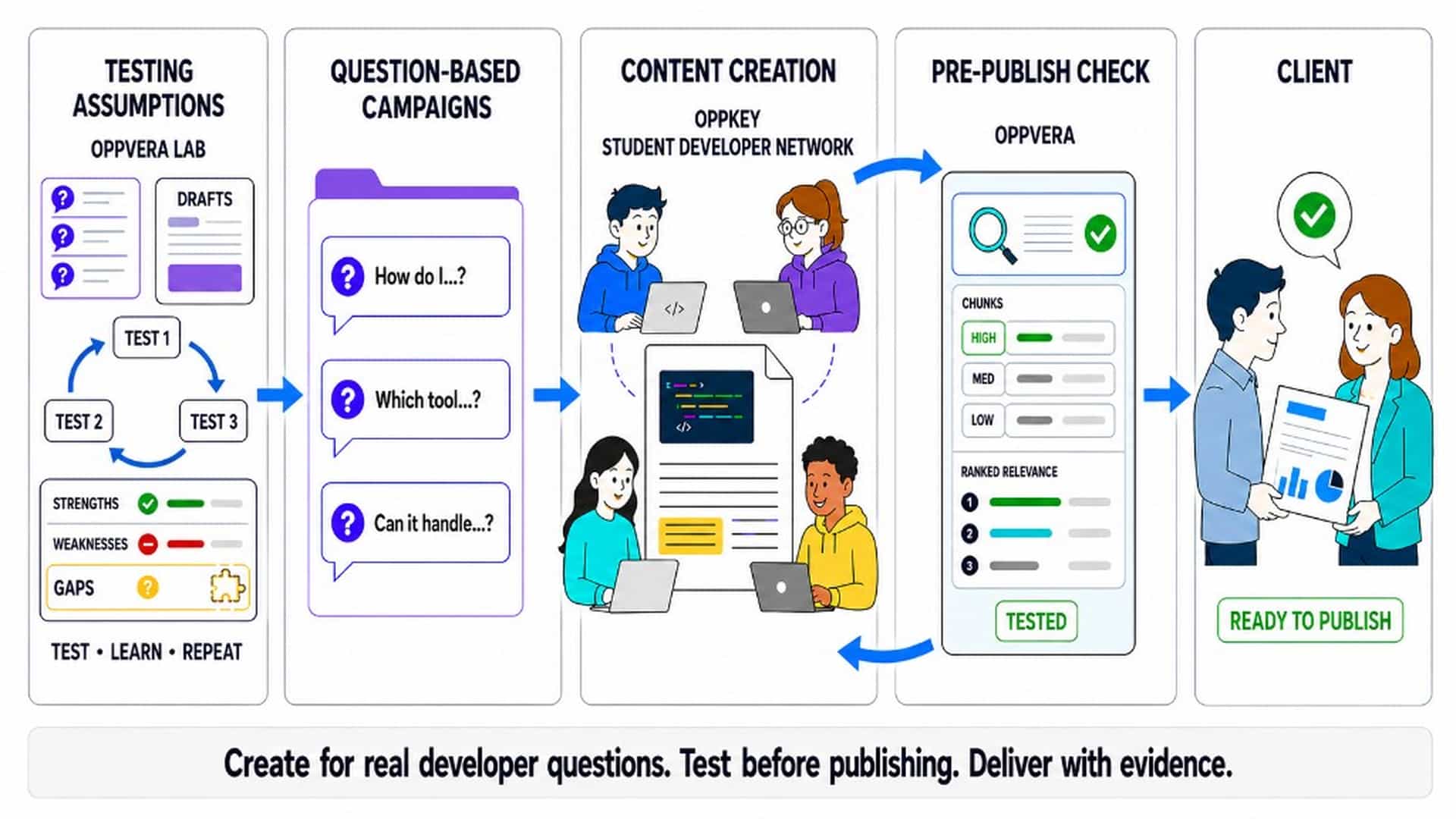
I recorded a short video with the main ideas. It is meant to start a conversation, not close one.
I’d love to share experiences and figure out a way to adjust
Are you seeing the same thing? When you review a new page, are you still judging it first as a human reader? Have you had work that felt right in the room and still never showed up in AI answers? Drop a comment. I want to hear what is changing in your review process.